
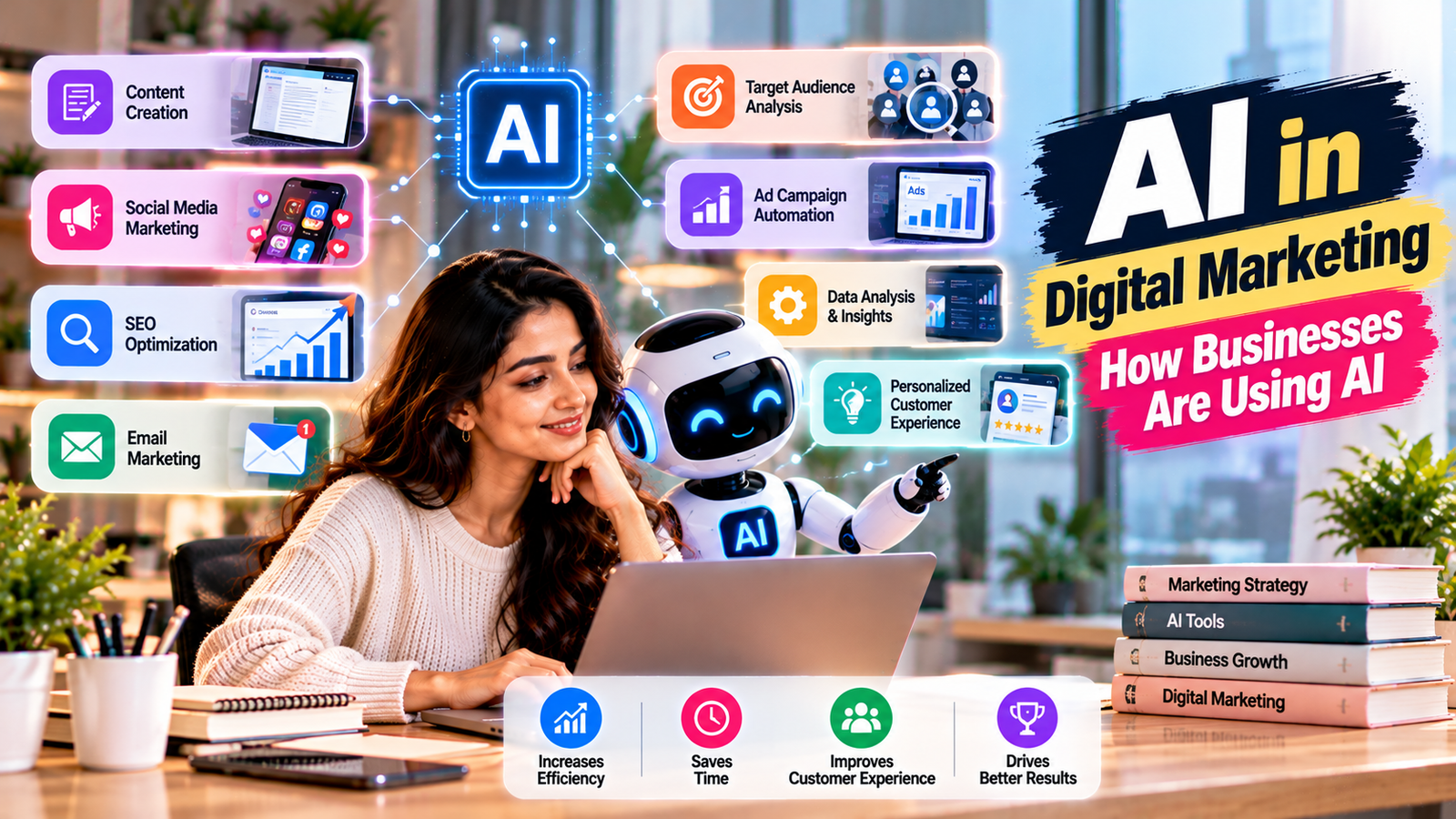
AI in Digital Marketing: How Businesses Are Using AI
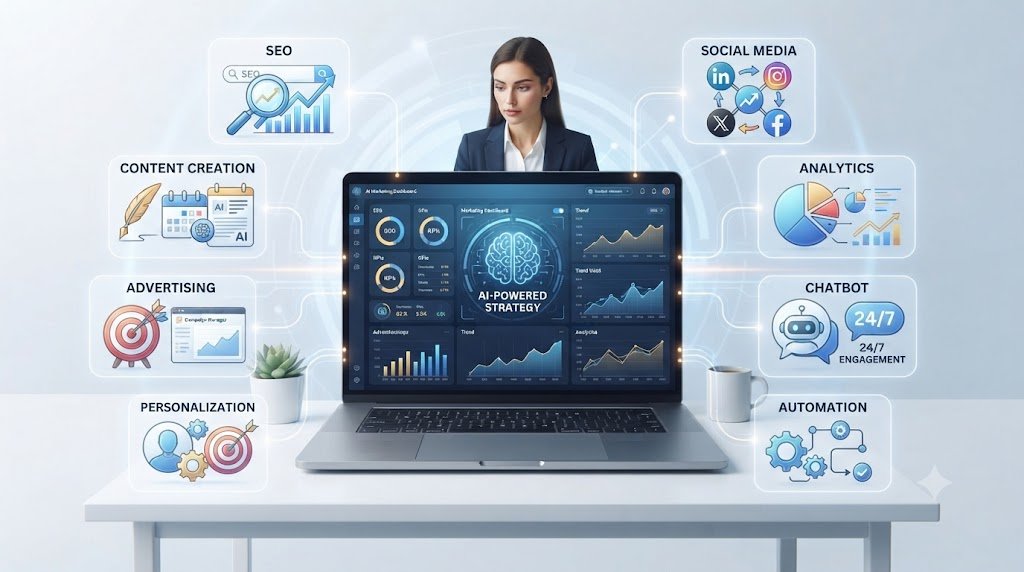
Artificial intelligence (AI) is changing the way businesses plan, create, and manage their digital marketing strategies. From generating content to analyzing customer behavior, AI in digital marketing helps businesses save time, understand audiences, and make data-driven decisions.
Today, businesses of all sizes are using AI to improve marketing efficiency while creating more personalized experiences for their customers.
1. AI for Content Creation
Businesses use AI tools to generate ideas, create content outlines, write social media captions, and assist with blog content.
However, AI-generated content still needs human editing, fact-checking, originality, and brand expertise to provide real value to readers.
Example:
A small business can use AI to generate 10 social media post ideas and then customize them according to its brand voice.
2. AI for SEO
AI can help marketers identify content opportunities, analyze keywords, create content briefs, and understand search intent.
It can also help businesses optimize content for traditional search engines as well as emerging AI-powered search experiences.
Important: AI should support your SEO strategy—not replace quality research and human expertise.
3. Personalized Marketing
AI can analyze customer behavior and preferences to help businesses deliver more relevant marketing messages.
For example, an online store may recommend products based on a customer’s previous searches or purchases.
This creates a more personalized experience and can improve customer engagement.
4. AI-Powered Advertising
Businesses are increasingly using AI in paid advertising to analyze campaign performance, identify audiences, test creative variations, and optimize advertising campaigns.
AI can process large amounts of campaign data much faster than manual analysis, helping marketers make informed decisions.
5. Chatbots and Customer Support
AI chatbots can answer frequently asked questions, provide basic product information, assist with website navigation, and offer support outside regular business hours.
For businesses, this can reduce repetitive support tasks while allowing human teams to focus on more complex customer issues.
6. Social Media Marketing
AI can assist social media marketers with:
- Content ideas
- Caption creation
- Hashtag research
- Content calendars
- Audience analysis
- Creative brainstorming
- Performance analysis
The best approach is to combine AI efficiency with authentic human storytelling.
7. Predictive Analytics
One of the most useful applications of AI is analyzing large amounts of data to identify patterns and trends.
Businesses can use these insights to understand customer behavior, forecast demand, identify potential opportunities, and improve marketing decisions.
How AI Is Changing Digital Marketing
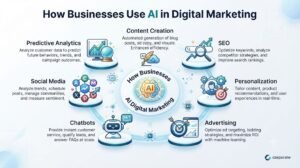
You can add this simple flowchart to make the article more visually engaging:
Customer Data → AI Analysis → Audience Insights → Personalized Content → Marketing Campaign → Performance Data → AI Optimization
This shows how AI can support the complete digital marketing cycle.
Benefits of AI in Digital Marketing
| Benefit | How AI Helps |
|---|---|
 Saves Time | Automates repetitive marketing tasks |
 Better Targeting | Helps identify relevant audiences |
 Data Analysis | Processes large amounts of information |
| ✍️ Content Support | Generates ideas and content drafts |
 Customer Support | Powers automated responses |
 Optimization | Helps identify campaign improvements |
Is AI Going to Replace Digital Marketers?
Not completely.
AI can automate many repetitive tasks, but marketers still provide strategy, creativity, emotional understanding, brand storytelling, critical thinking, and decision-making.
The future of digital marketing is likely to be AI + human expertise, rather than AI replacing humans entirely.

Final Thoughts
AI is becoming an important part of modern digital marketing. Businesses are using it for SEO, content creation, advertising, personalization, social media, customer support, and data analysis.
For marketers, the goal shouldn’t simply be to use AI everywhere. Instead, use AI where it can improve efficiency while keeping human creativity, accuracy, originality, and strategy at the center.