
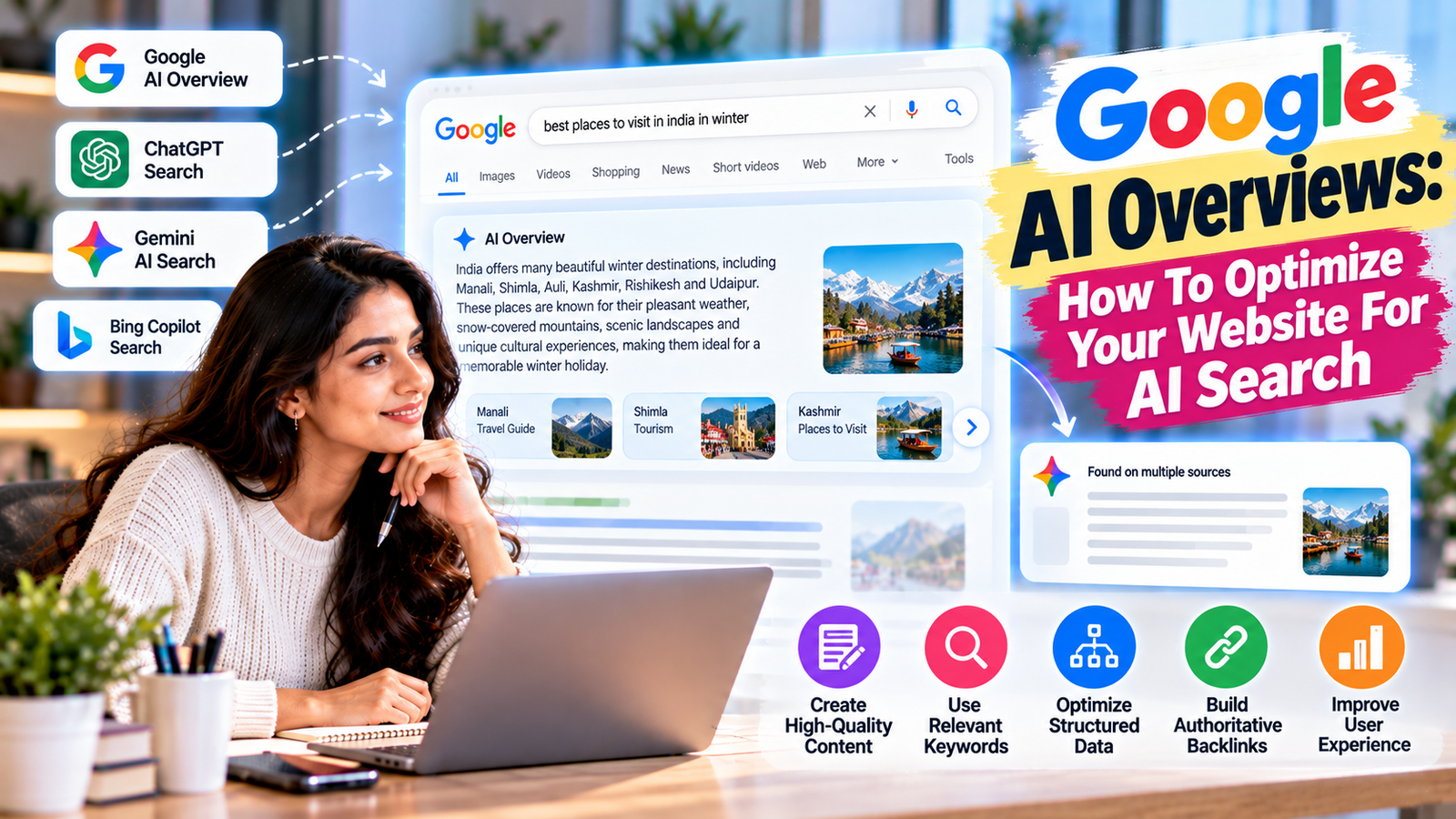
Google AI Overviews: How to Optimize Your Website for AI Search
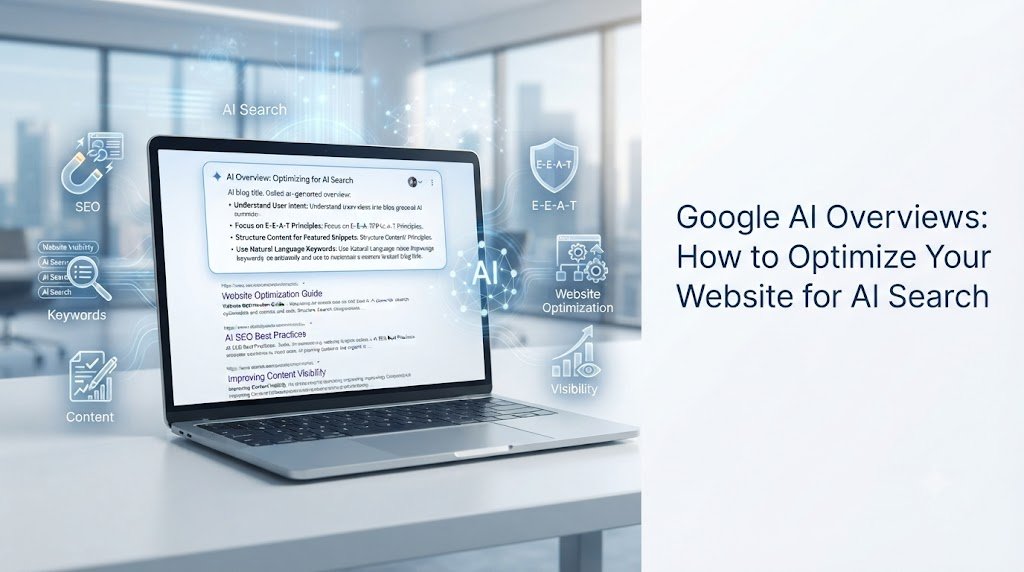
Google AI Overviews are changing how people find information online. Instead of showing only traditional blue links, Google can provide an AI-generated summary at the top of search results.
For businesses and website owners, this means SEO is no longer only about ranking on page one. Your content should also be clear, trustworthy, useful, and easy for AI systems to understand and reference.
What Are Google AI Overviews?
Google AI Overviews provide AI-generated answers to certain search queries by bringing together information from relevant web sources.
For your website, the goal is not to “hack” AI Overviews. Instead, focus on creating high-quality content that deserves to be found, understood, and cited.
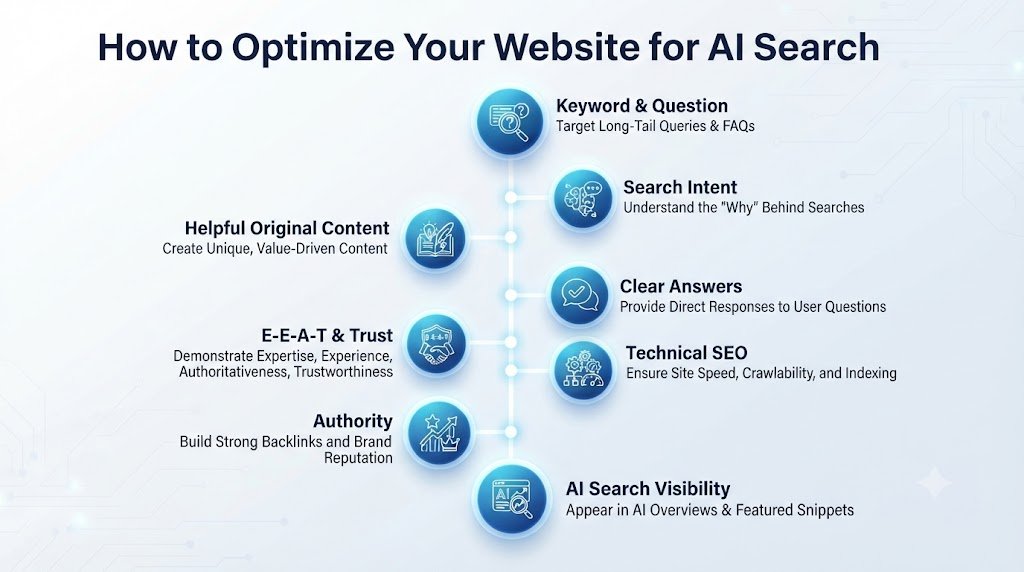
How to Optimize Your Website for AI Search
1. Create Helpful, Original Content
Write content that directly answers your audience’s questions. Avoid thin, repetitive, or generic content.
Include:
- Original insights
- Practical examples
- Clear explanations
- Updated information
- Relevant statistics or sources where appropriate
2. Answer Questions Clearly
Use headings and short sections that answer specific questions.
For example:
What is SEO?
SEO is the process of improving a website so that search engines can better understand and rank its content.
Clear answers make your content easier to understand for both users and search systems.
3. Strengthen E-E-A-T Signals
Demonstrate Experience, Expertise, Authoritativeness, and Trustworthiness.
Add:
- Author information
- About page
- Contact information
- Credible sources
- First-hand experience
- Updated content
4. Use Structured Content
Organize your page with:
- H2 and H3 headings
- Bullet points
- Tables
- FAQs
- Short paragraphs
- Step-by-step explanations
This creates a better experience for readers and makes important information easier to identify.
5. Keep Your Technical SEO Strong
AI search optimization does not replace traditional SEO.
Make sure your website has:
- Fast loading speed
- Mobile-friendly design
- Crawlable pages
- Descriptive page titles
- Internal links
- Proper canonicalization
- HTTPS
- Structured data where relevant
Simple AI Search Optimization Flow Chart
Keyword / Question
↓
Understand Search Intent
↓
Create Helpful & Original Content
↓
Add Clear Answers + Examples
↓
Strengthen Trust & Expertise
↓
Optimize Technical SEO
↓
Build Relevant Authority
↓
Monitor Search Performance
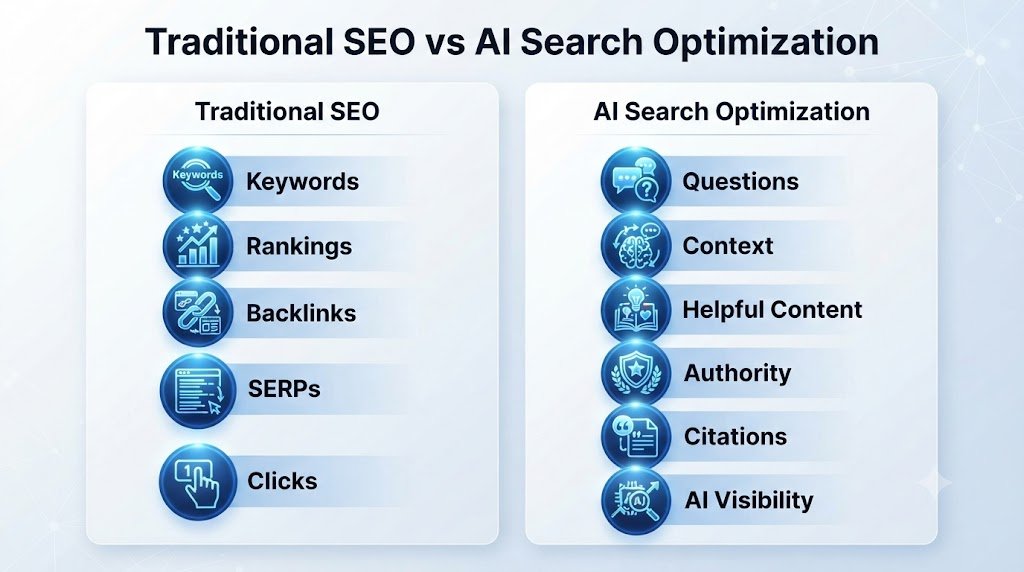
Traditional SEO vs AI Search Optimization
| Traditional SEO | AI Search Optimization |
|---|---|
| Focuses on rankings | Focuses on visibility in AI-generated answers |
| Targets keywords | Targets questions and topics |
| Optimizes webpages | Optimizes information and context |
| Backlinks are important | Authority and trustworthy sources matter |
| SERP clicks are a key goal | Visibility, citations and qualified traffic matter |
| Search engine focused | Search + AI discovery focused |
Final Takeaway
Google AI Overviews are making search more conversational and answer-focused. The best strategy is to combine traditional SEO with helpful, authoritative and well-structured content.
Don’t write specifically to manipulate AI results. Create content that genuinely answers users better than competing pages. This gives your website a stronger foundation for both traditional search and AI-powered search.