
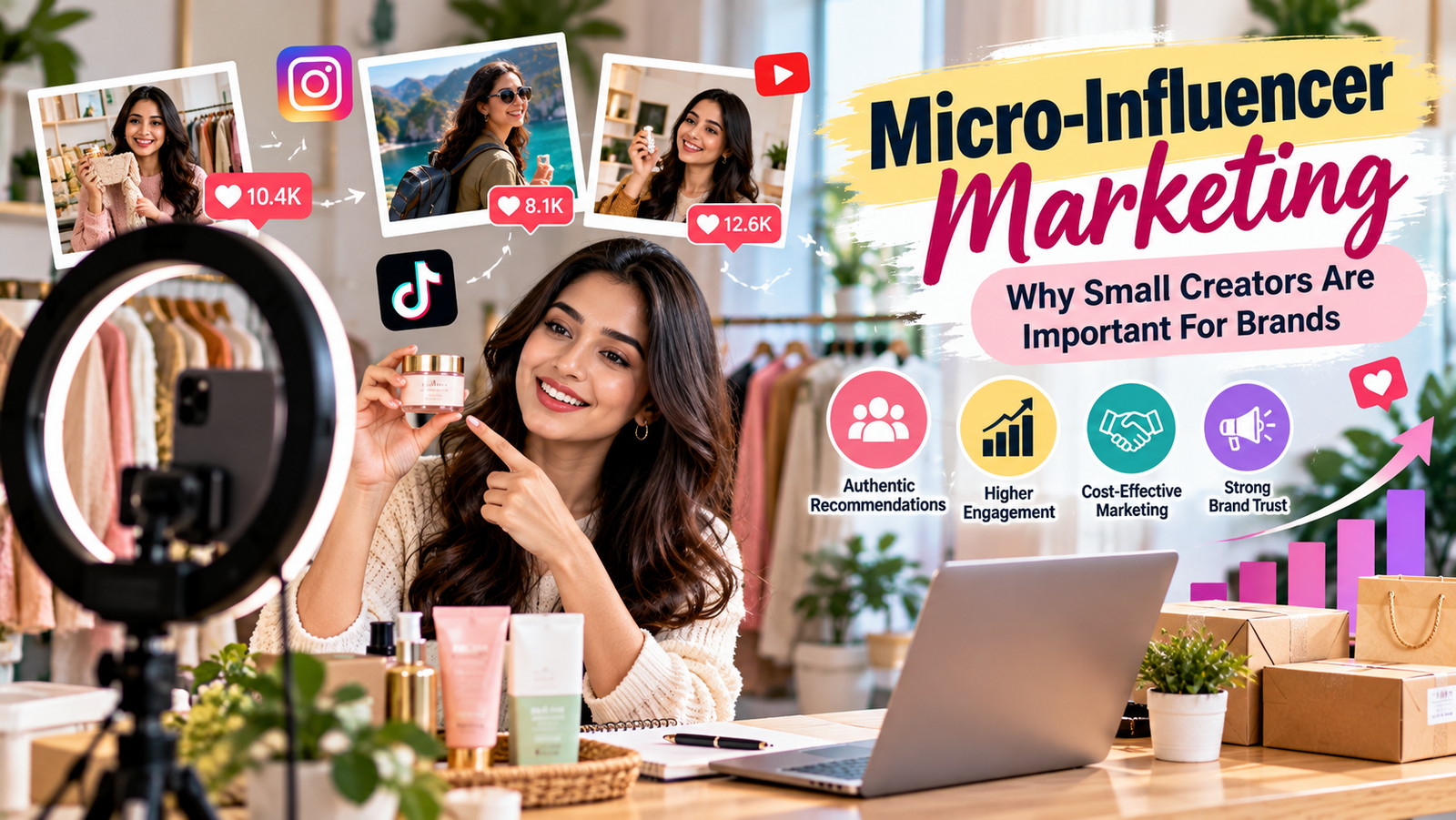
Micro-Influencer Marketing: Why Small Creators Are Important for Brands

Introduction
Influencer marketing is no longer limited to celebrities with millions of followers. Many businesses are collaborating with smaller creators who have engaged audiences and expertise in specific niches.
These creators are commonly known as micro-influencers.
Recent social media marketing research identifies micro-influencers and niche creators as an important opportunity for brands looking to build authentic relationships with audiences.
What is micro-influencer marketing?
Micro-influencer marketing involves collaborating with creators who have relatively small but focused audiences.
A common industry definition places micro-influencers between approximately 10,000 and 100,000 followers, although classifications vary.
These creators may specialize in fashion, beauty, technology, education, fitness, food, or local businesses.
Why are brands choosing micro-influencers?
1. Niche audience targeting
Micro-influencers often create content for specific interests, helping businesses connect with relevant customers.
2. Authentic recommendations
Smaller creators may maintain closer relationships with their audiences, making genuine product demonstrations valuable.
3. Flexible collaboration budgets
Micro-influencer partnerships can sometimes be more affordable than celebrity campaigns, although prices vary significantly.
4. Local marketing opportunities
Local creators can help restaurants, boutiques, handmade product brands, and service providers reach nearby customers.
5. Creative product promotion
Brands can collaborate on tutorials, unboxing videos, demonstrations, and product reviews.
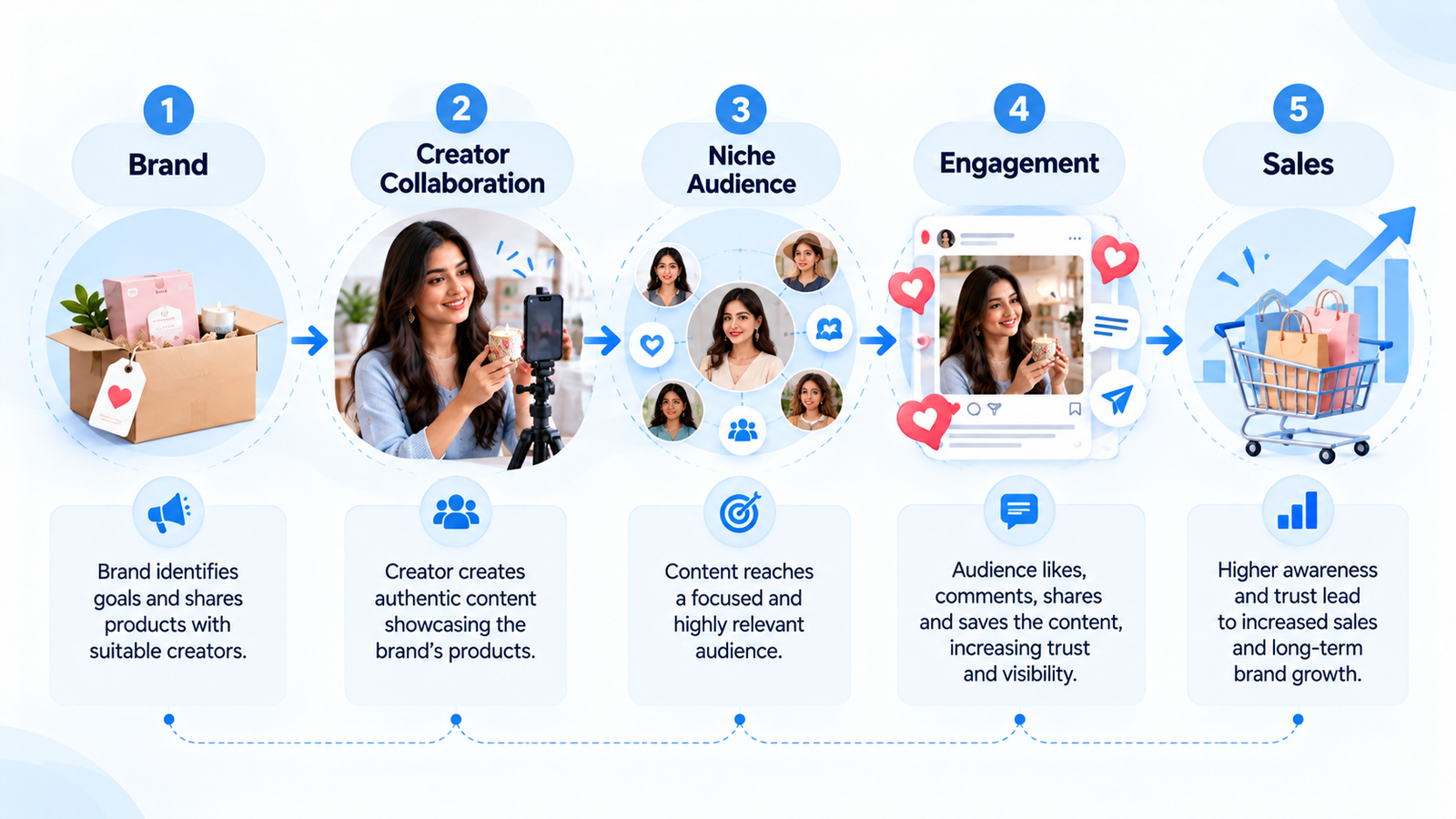
How to create a micro-influencer campaign
Step | Action |
|---|---|
1 | Define your campaign goal |
2 | Identify relevant niche creators |
3 | Review audience quality and engagement |
4 | Agree on deliverables and compensation |
5 | Ensure appropriate advertising disclosures |
6 | Track traffic, leads, sales, and engagement |
Example for a small business
Imagine a handmade home décor brand launching a festive collection.
Instead of paying a single celebrity creator, the business could collaborate with several local home décor and lifestyle creators.
Each creator could demonstrate the actual products in a natural home setting and share their experience with followers.
The brand could then measure campaign results using unique discount codes or tracked links.
Conclusion
Micro-influencer marketing can help businesses build trust, reach niche communities, and promote products through relatable content.
The key is choosing creators based on audience relevance, content quality, and measurable business results rather than follower count alone.