

How to Start a Blog and Make Money From It
Introduction
Blogging is a way to share knowledge, build an online presence, and potentially generate income. Many successful blogs begin by focusing on a specific audience and consistently answering questions.
However, blogging is not a guaranteed source of income. It requires content planning, research, technical maintenance, and time.
Step 1: Choose Your Blogging Niche
A niche is the main subject your blog covers.
Popular categories include technology, travel, education, personal finance, food, and digital marketing.
Choose a topic that combines your interests, knowledge, and audience demand.
Step 2: Select a Blogging Platform
Consider WordPress, Blogger, or another content management system.
Compare ease of use, hosting costs, customization options, and long-term flexibility.
Step 3: Choose a Domain Name
Select a memorable name that reflects your blog’s identity.
A custom domain can support professional branding, although it usually involves a recurring registration cost.
Step 4: Set Up Essential Pages
Create a homepage, about page, contact page, and privacy policy where appropriate.
Organize your articles into clear categories.
Step 5: Research Blog Topics
Use Google Trends, search suggestions, keyword research tools, and audience questions to identify useful article ideas.
Focus on search intent rather than choosing topics solely because they appear popular.
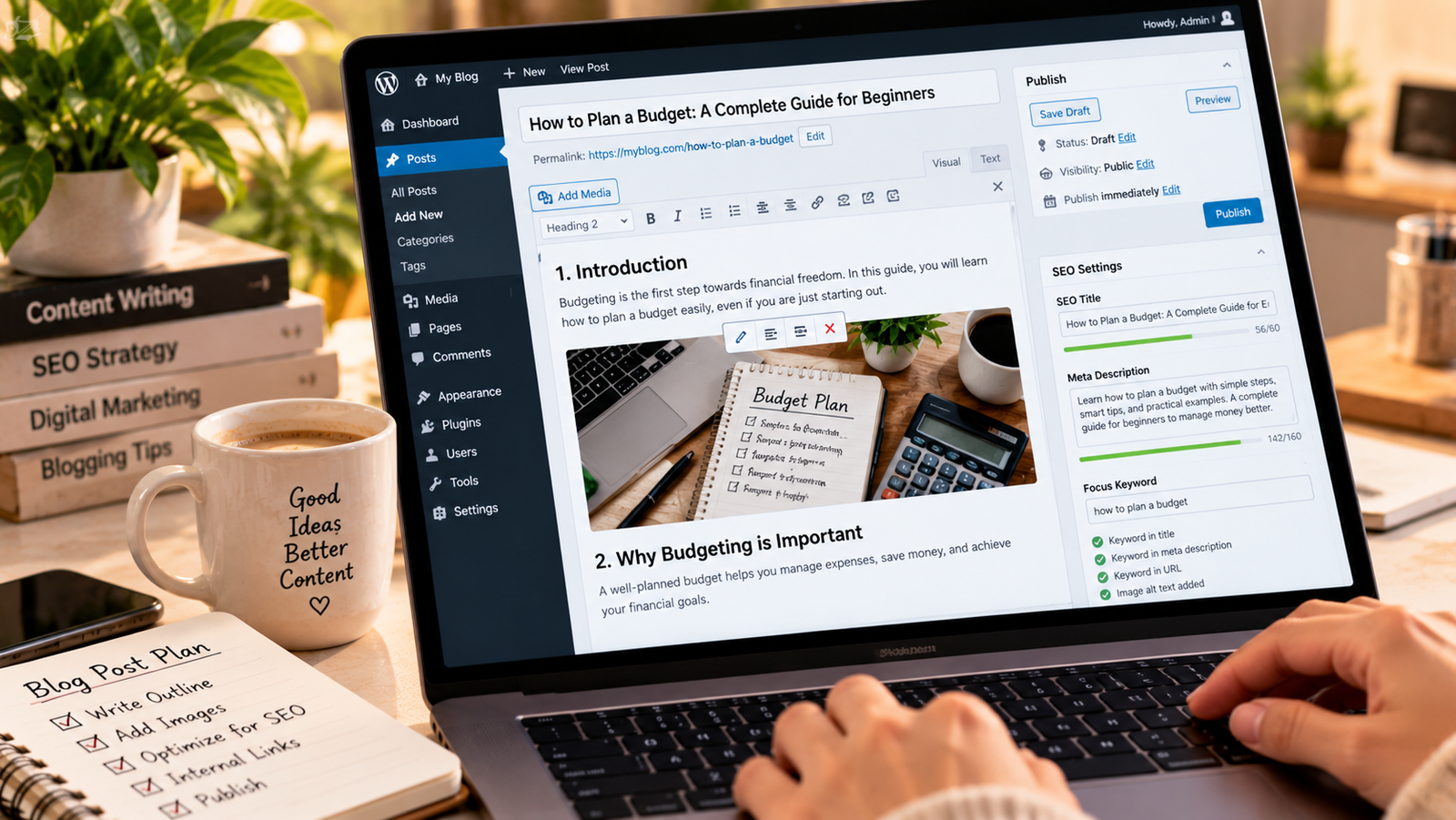
Step 6: Write SEO-Friendly Articles
Create descriptive titles, clear headings, original explanations, and relevant internal links.
Use screenshots, tables, and examples when they genuinely improve the reader’s understanding.
Step 7: Build Your Audience
Promote useful content through search engines, Pinterest, newsletters, and relevant communities.
Avoid spammy backlink practices or purchasing artificial traffic.
Step 8: Explore Monetization
Common blog monetization methods include display advertising, affiliate marketing, sponsored content, digital products, and professional services.
Disclose commercial relationships clearly and follow applicable platform policies.
Conclusion
A successful blog starts with useful content and a clearly defined audience. Build trust and traffic before expecting substantial income, and treat monetization as a long-term business activity.