Introduction
Python is a popular programming language used in automation, data analysis, web development, and artificial intelligence.
Its readable syntax makes it a common starting point for beginners.
Step 1: Understand What Python Can Do
Explore how Python is used to process information, automate repetitive tasks, analyze datasets, and build applications.
Step 2: Install Python
Download Python from the official Python website and follow the installation instructions for your operating system.
Alternatively, use a suitable browser-based coding environment.
Step 3: Write Your First Program
Start with a simple statement:
This displays text in the program’s output.
Step 4: Learn Variables
Variables store values that a program can use.
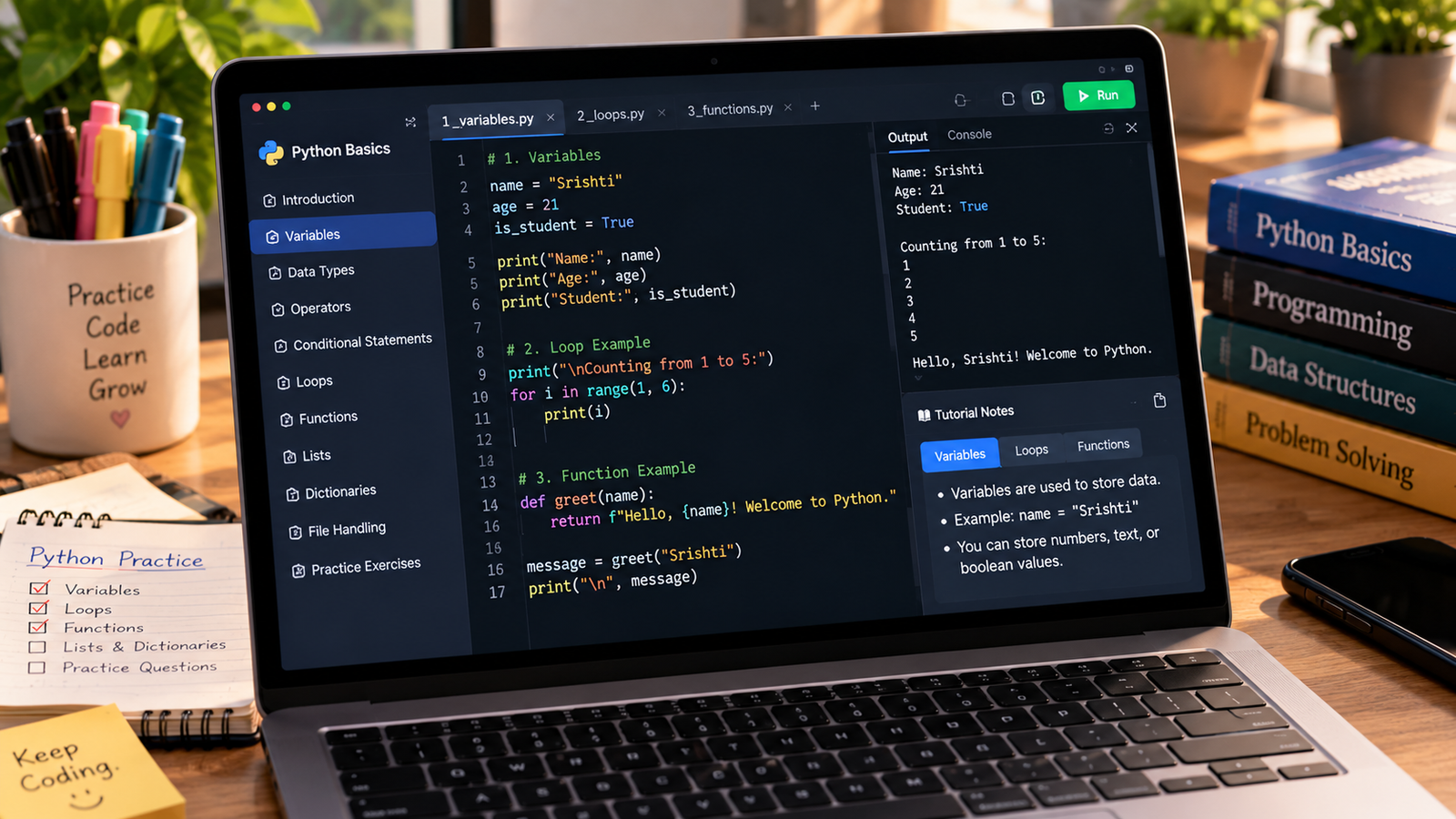
name = "Student"age = 20print(name, age)
Step 5: Practice Conditional Statements
Learn how programs make decisions using if, elif, and else.
Step 6: Understand Loops
Loops repeat instructions.
for number in range(1, 6): print(number)
Step 7: Learn Functions
Functions help organize reusable code.
def greet(name): return f"Hello, {name}!"print(greet("Student"))
Step 8: Build Small Projects
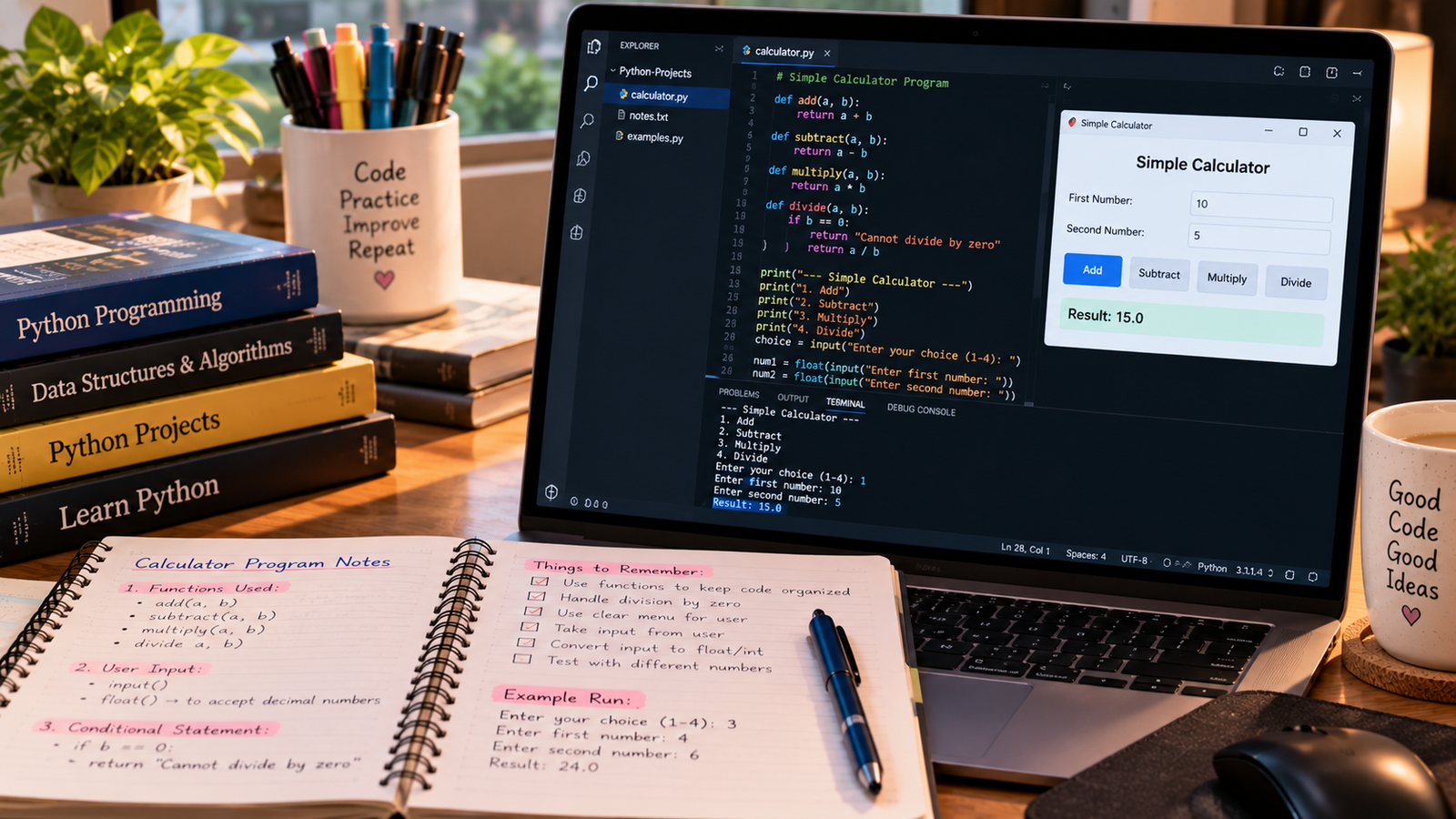
Begin with a calculator, quiz application, expense tracker, or simple text-based game.
Conclusion
Learning Python requires regular practice. Start with fundamental concepts, write small programs, and gradually move toward projects that interest you.