
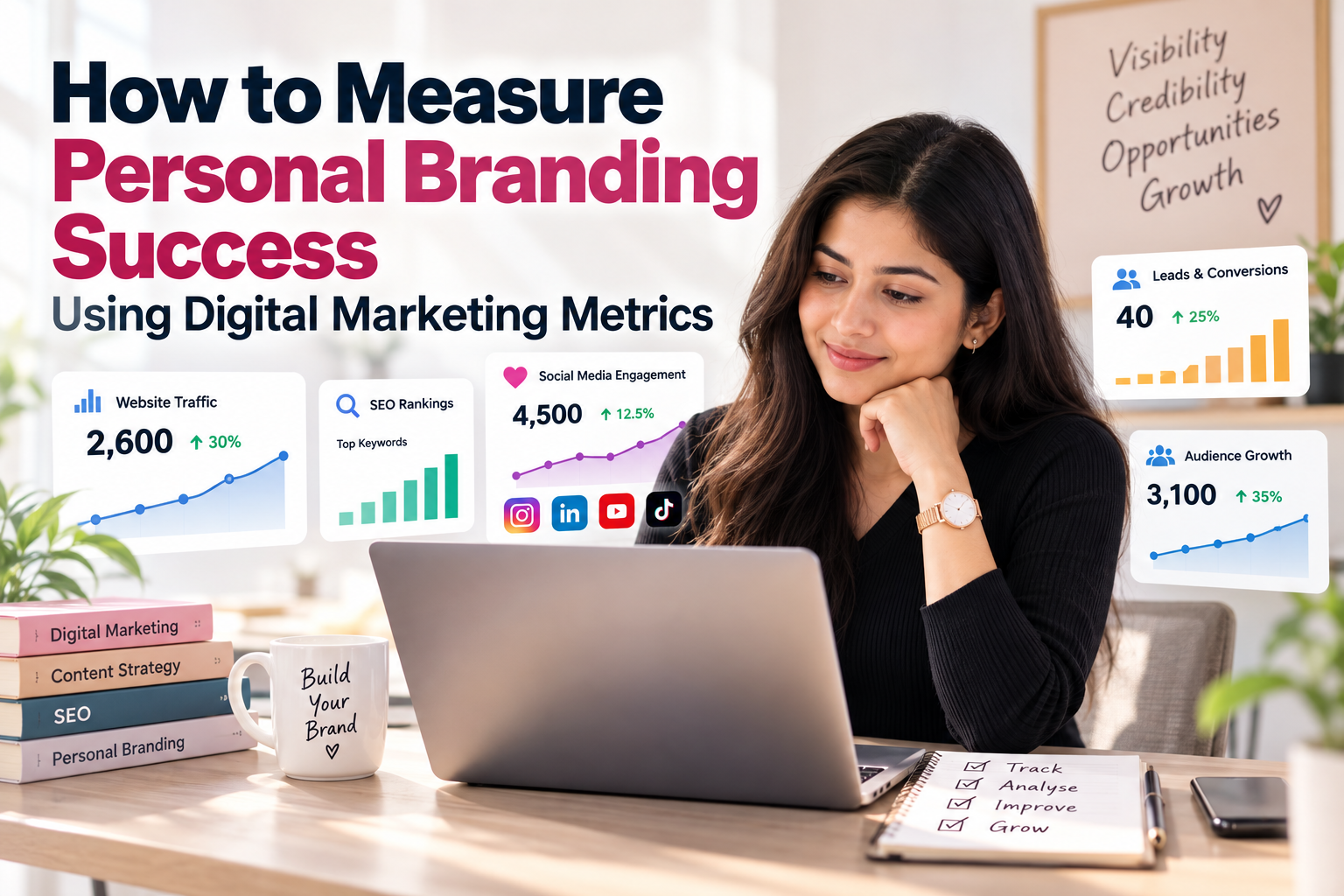
How to Measure Personal Branding Success: Important Metrics and Tools

Creating a personal brand is only one part of the process. Understanding whether your efforts are producing meaningful results is equally important.
Many professionals judge personal branding success entirely by follower counts and likes.
However, these numbers do not always reflect professional credibility, audience relevance, or career opportunities.
A more effective approach involves measuring several indicators that align with your personal branding goals.
Why Should You Measure Personal Branding?
Tracking performance helps you understand which activities are working.
It can reveal whether your content reaches the intended audience, attracts website visitors, and encourages relevant professional interactions.
Measurement also helps you make informed decisions about future content and platform priorities.
1. Track Website Traffic
If you have a personal website, traffic data can help you understand how visitors discover your content.
Google Analytics can provide information about visits, traffic sources, and user engagement.
Focus on trends over time rather than isolated daily changes.
For example, increasing visits to educational blog posts may indicate growing interest in those subjects.
2. Monitor Search Engine Visibility
Google Search Console provides useful information about your website’s performance in Google Search.
You can review impressions, clicks, click-through rates, and average search positions.
Identify articles that attract relevant search traffic and opportunities to improve content.
Search visibility is especially important if blogging is part of your personal branding strategy.
3. Evaluate Social Media Engagement
Social media engagement can indicate whether your audience finds your content interesting or useful.
Depending on the platform, relevant metrics may include comments, shares, saves, profile visits, and engagement rates.
Consider the quality of interactions as well as the quantity.
A thoughtful conversation with a potential collaborator may be more valuable than many unrelated likes.
4. Measure Professional Opportunities
Personal branding should support meaningful goals.
Track opportunities such as freelance inquiries, interview invitations, speaking requests, collaborations, or relevant networking conversations.
These outcomes often provide a clearer picture of professional value than follower growth alone.
5. Analyze Audience Growth
Follower growth can still be useful when interpreted correctly.
Monitor whether your audience includes people who are relevant to your professional niche.
For example, a digital marketing educator may benefit from attracting students, marketers, entrepreneurs, and small business owners.
The relevance of your audience matters more than the total number alone.
6. Monitor Brand Mentions and Reputation
Pay attention to where your name, website, or professional work is mentioned online.
Brand mentions can help you understand how your expertise is being discussed.
You can also review feedback from clients, colleagues, and professional contacts.
Use this information to identify strengths and areas for improvement.
Personal Branding Metrics Comparison
Metric | What It Measures | Useful Tool |
|---|---|---|
Website traffic | Visits and traffic sources | Google Analytics |
Search impressions | Appearance in Google Search results | Google Search Console |
Organic clicks | Visits from Google Search | Google Search Console |
Social engagement | Audience interactions | Platform insights |
Professional inquiries | Potential business or career opportunities | Contact form or CRM |
Audience growth | Change in follower numbers | Social platform analytics |
Brand mentions | References to your name or work | Google Alerts and manual monitoring |
How to Create a Monthly Personal Branding Report
Begin by identifying three to five metrics that support your goals.
For example, if your main objective is attracting freelance clients, you might track website inquiries, relevant profile visits, and qualified leads.
If your goal is becoming known for educational content, you might prioritize organic search clicks, returning visitors, and meaningful engagement.
Compare results monthly, identify which content performed well, and decide what to improve.
Avoid making major strategy changes based on very small amounts of data.
Common Personal Branding Measurement Mistakes
One common mistake is tracking too many metrics without connecting them to clear goals.
Another is focusing on vanity metrics while ignoring meaningful professional outcomes.
It is also important to distinguish correlation from causation. An increase in website inquiries may happen alongside personal branding activity without proving that branding alone caused the increase.
Use performance data as evidence to guide decisions, not as a guarantee of future results.
Conclusion
Measuring personal branding success requires a combination of visibility, engagement, and professional outcome metrics.
By using tools such as Google Analytics, Google Search Console, and social media insights, you can better understand how your personal brand is developing.
Choose metrics that reflect your actual goals and use the findings to improve your content and communication strategy.