
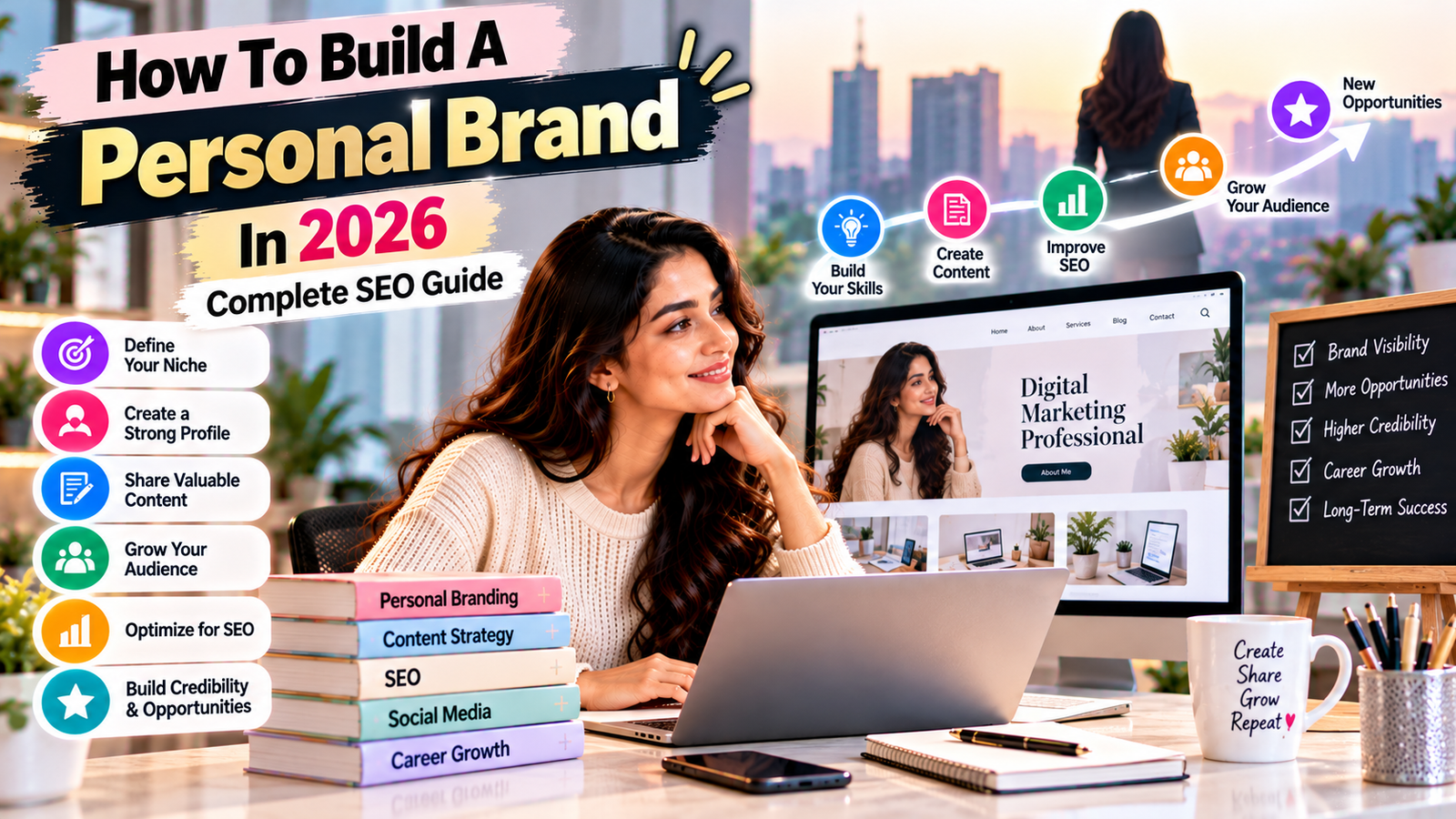
How to Build a Personal Brand in 2026
A practical guide for freelancers, creators, job seekers and founders · 8 min read
Your name is searched, screenshotted and summarised by AI before you ever walk into the room. A personal brand is simply how you decide what people find. Here is how to build one on purpose.
In 2026, search results are increasingly written by AI assistants, hiring managers check your profile before your CV, and clients decide within seconds whether you look credible. You cannot opt out of having a personal brand. You can only decide whether it is planned or accidental.
1. Get clear on who you are and what you stand for
Before you design anything, write down three things: what you are good at, who you want to help, and what you want to be known for. If you cannot say it in one sentence, your audience will not be able to repeat it either.
Try this sentence: "I help [who] achieve [result] through [your approach]." Rewrite it until a stranger would understand it instantly.
2. Choose a niche, then go deeper than everyone else
"Marketing expert" is invisible. "Marketing for independent bakeries" is memorable. A narrow focus makes you easier to recommend, easier to find and easier to trust. You can widen later, once people already know you.
- Pick a problem you enjoy solving repeatedly.
- Study your audience. Read their comments, questions and complaints.
- Own a point of view. Take a clear position on something in your field.
3. Build a home base you control
Social platforms change their rules constantly. Your own website, portfolio or newsletter is the one place nobody can take away. It should answer three questions fast: who are you, what do you do, and how can someone work with you?
Keep the essentials consistent everywhere you appear: the same name, photo, colours, and short bio on your website, LinkedIn, Instagram and email signature.
4. Create a visual identity that is easy to repeat
You do not need a designer to look professional. You need a small set of choices and the discipline to stick with them.
- Two or three brand colours plus black and white
- One or two fonts
- A clear, well-lit profile photo
- A few reusable templates for posts and presentations
5. Show up with content that proves your expertise
Claiming expertise is easy. Demonstrating it publicly is what builds trust. Share what you learn, how you solve problems and what you got wrong.
A simple content mix
- Teach: share a tip, framework or how-to.
- Show: case studies, results and behind-the-scenes work.
- Share: your opinions, lessons and personal stories.
Short video remains one of the fastest ways to be discovered, while newsletters and long articles are where people get to know you properly.
6. Use AI as your assistant, not your voice
AI tools can help you brainstorm ideas, outline posts, repurpose a long article into several short ones and tidy your grammar. But audiences are getting better at spotting generic, copy-paste writing. What they cannot get from a machine is your real experience, your opinions and your stories.
- Let AI create the first draft, then rewrite it in your own words.
- Add a real example or number from your own work to every piece.
- Never publish anything you have not read and stand behind.
7. Build relationships, not just followers
Follower counts are a weak measure. A small group of people who know, trust and recommend you is worth far more.
- Reply to comments and messages personally.
- Comment thoughtfully on other people's work in your field.
- Collaborate: guest posts, podcasts, joint webinars, panels.
- Attend or host events, online and in person.
8. Stay consistent and measure what matters
Most personal brands fail because people stop, not because their ideas were bad. Choose a rhythm you can actually keep, such as two posts a week and one newsletter a month, and protect it.
Track a few numbers that show real influence rather than vanity:
- Profile visits and website traffic
- Newsletter subscribers and replies
- Inbound messages, invitations and opportunities
- Saves and shares, which matter more than likes
9. Protect your reputation and stay authentic
Trust is the core of any personal brand. Be honest about what you know and do not know, credit other people's work, and correct your mistakes openly. Review your privacy settings, search your own name regularly, and think before posting anything you would not want a future client or employer to see.
Authenticity does not mean sharing everything. It means that what you do share is true and consistent with who you are.
Your 30-day starter checklist
- Write your one-sentence brand statement
- Choose your niche and your ideal audience
- Update your profile photo and bio on every platform
- Set up a simple website or portfolio page
- Pick two content formats and plan your first ten posts
- Start a weekly habit of commenting on others' work
- Set your posting schedule and review results monthly
Final thoughts
Building a personal brand in 2026 is not about becoming famous. It is about being clear, useful and consistent for the right people. Start small, show your work, keep your word, and let trust build over time. The best day to start was last year. The next best day is today.