
Sending the same email to every subscriber is easy but rarely effective. People join your list for different reasons, and segmentation lets you send each group content that matches their interests, which increases opens, clicks and sales.
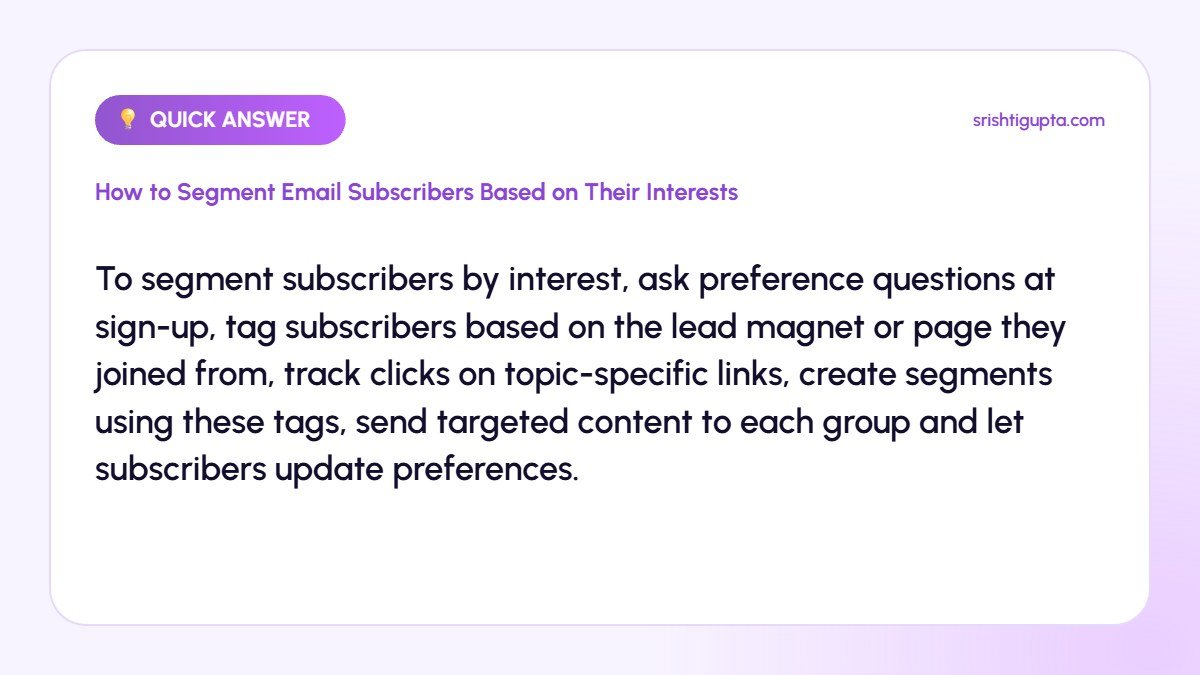
Quick answer: To segment subscribers by interest, ask preference questions at sign-up, tag subscribers based on the lead magnet or page they joined from, track clicks on topic-specific links, create segments using these tags, send targeted content to each group and let subscribers update preferences.
Why It Matters
Relevant emails feel personal and useful. Segmentation reduces unsubscribes and spam complaints, improves deliverability and helps you understand what different parts of your audience care about.
Step-by-Step: How to Segment Email Subscribers Based on Their Interests
Step 1: Decide your main interest groups
Choose a few segments that reflect your products or topics, such as SEO, social media and paid ads, or beginners and advanced users.
Step 2: Collect interests at sign-up
Add a simple checkbox or dropdown to your form asking what topics people want to receive. Keep options short and clear.
Step 3: Tag by source and lead magnet
Automatically tag subscribers based on the form, landing page or download they used, since this shows their initial interest.
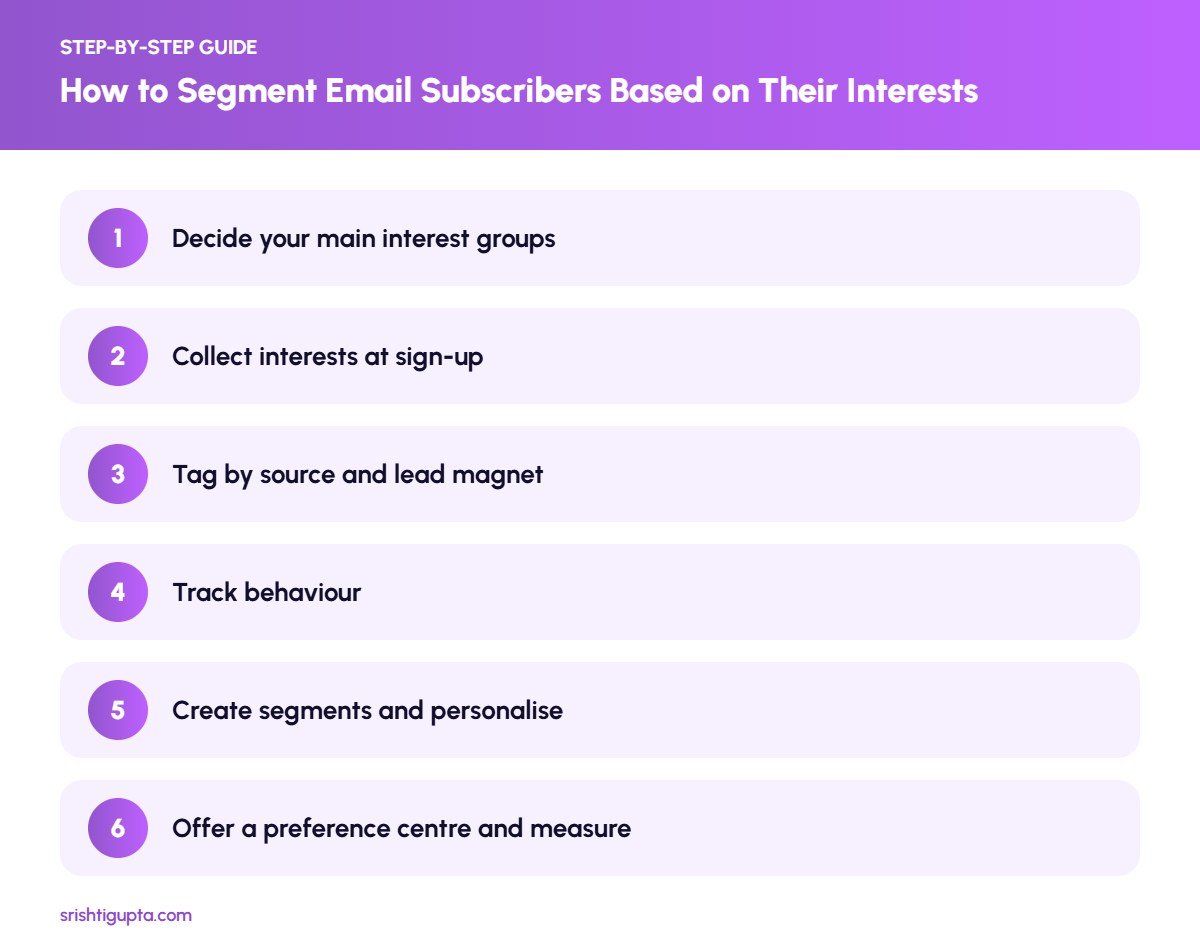
Step 4: Track behaviour
Use link click tracking to tag subscribers who click on specific topics. Over time this builds a more accurate interest profile.
Step 5: Create segments and personalise
Build segments in your email tool using tags and behaviour. Send topic-specific newsletters, offers and automations to each group.
Step 6: Offer a preference centre and measure
Let subscribers update interests and frequency. Compare open, click and conversion rates for segmented versus general campaigns.
Pro Tips
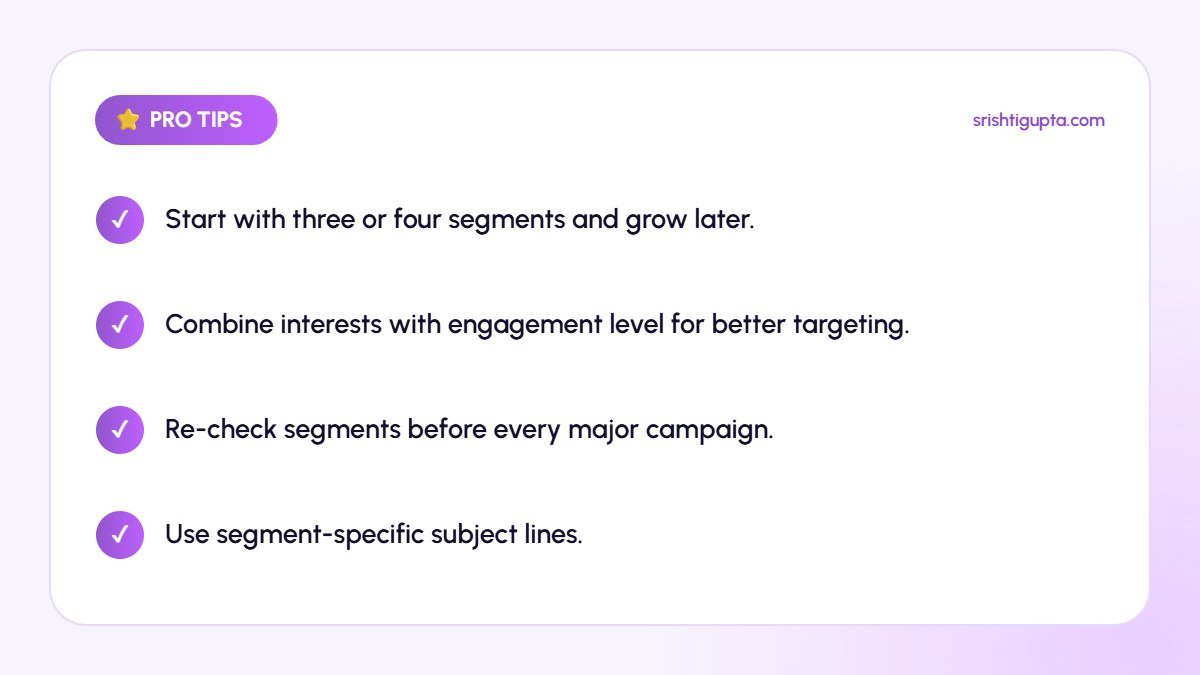
- Start with three or four segments and grow later.
- Combine interests with engagement level for better targeting.
- Re-check segments before every major campaign.
- Use segment-specific subject lines.
Common Mistakes to Avoid
- Creating too many tiny segments that are hard to manage.
- Asking for preferences but never using them.
- Relying only on demographics instead of behaviour.
- Ignoring subscribers without tags.
Frequently Asked Questions
What is email segmentation?
It is dividing your email list into smaller groups based on shared characteristics such as interests, behaviour, location or purchase history.
Does segmentation improve email results?
Yes. Segmented campaigns usually achieve higher open and click rates because the content is more relevant.
Which tools support segmentation?
Most platforms including Mailchimp, Brevo, MailerLite, ConvertKit and HubSpot support tags, segments and automations.
Final Thoughts
Email segmentation turns one big broadcast into many relevant conversations. Collect interest data, tag behaviour and personalise campaigns, and your subscribers will look forward to your emails.
Need expert help? Srishti Gupta is a digital marketing expert in Ludhiana. Explore her digital marketing services or get in touch to discuss your project.