
A negative review going viral, an offensive post, a product failure or a data leak can quickly turn into a social media crisis. Brands that respond calmly and quickly usually recover well, while those that panic or stay silent can suffer lasting damage. A plan prepared in advance makes all the difference.
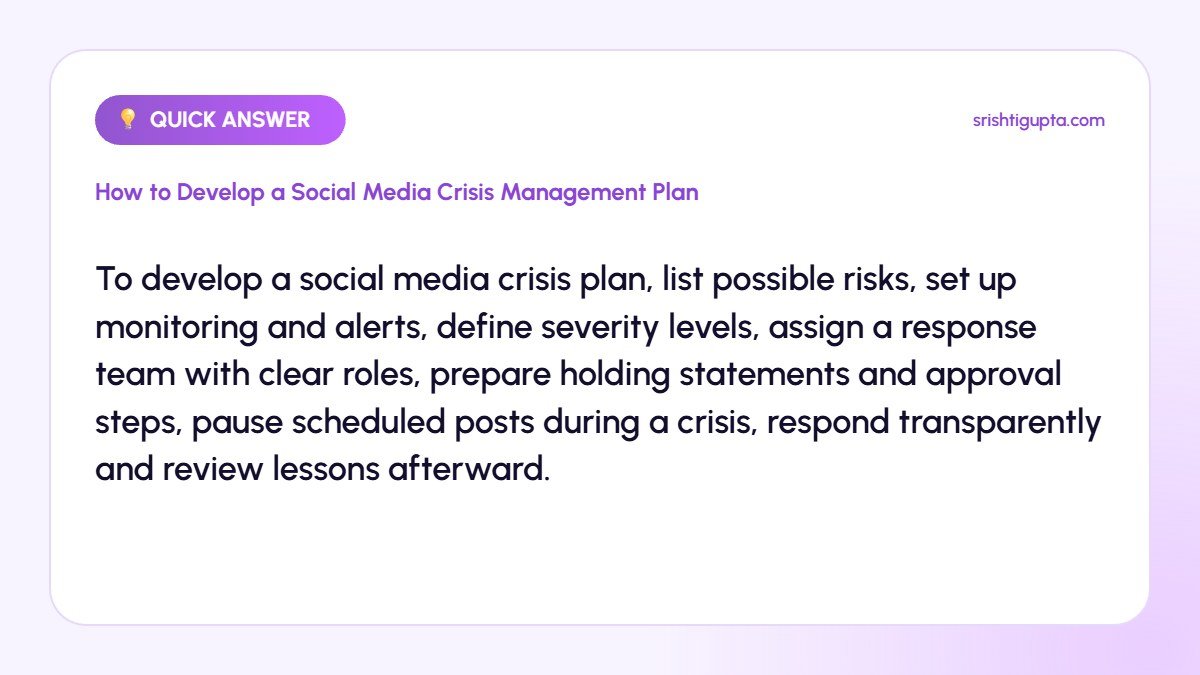
Quick answer: To develop a social media crisis plan, list possible risks, set up monitoring and alerts, define severity levels, assign a response team with clear roles, prepare holding statements and approval steps, pause scheduled posts during a crisis, respond transparently and review lessons afterward.
Why It Matters
During a crisis every minute counts and emotions run high. A documented plan prevents rushed mistakes, ensures consistent messaging and shows customers that your business takes responsibility seriously.
Step-by-Step: How to Develop a Social Media Crisis Management Plan
Step 1: Identify potential risks
List scenarios that could affect your business, such as product issues, service failures, employee posts, misleading rumours or security breaches. Rank them by likelihood and impact.
Step 2: Set up monitoring
Use notifications, Google Alerts and social listening tools to track brand mentions, reviews and comments. Early detection keeps small issues from growing.
Step 3: Define severity levels
Create levels such as low (single complaint), medium (multiple complaints) and high (viral or legal risk). Each level has a defined response time and escalation path.
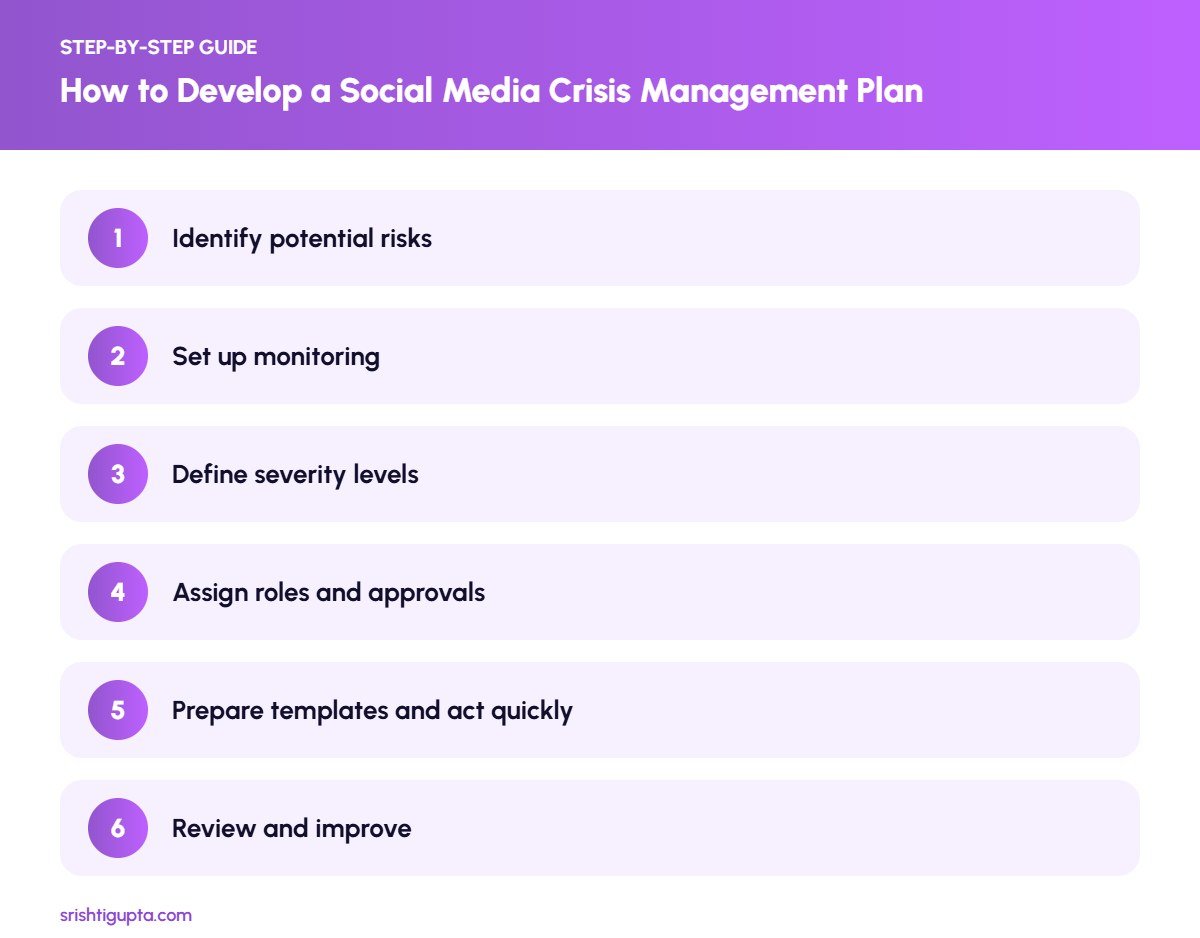
Step 4: Assign roles and approvals
Decide who monitors, who drafts responses, who approves statements and who speaks publicly. Keep contact details for leadership and legal advisers in one place.
Step 5: Prepare templates and act quickly
Write holding statements that acknowledge the issue and promise updates. Pause scheduled posts, respond with empathy and facts, and move detailed conversations to private messages.
Step 6: Review and improve
After the crisis, analyse what happened, how the team responded and how sentiment changed. Update the plan, templates and training based on lessons learned.
Pro Tips
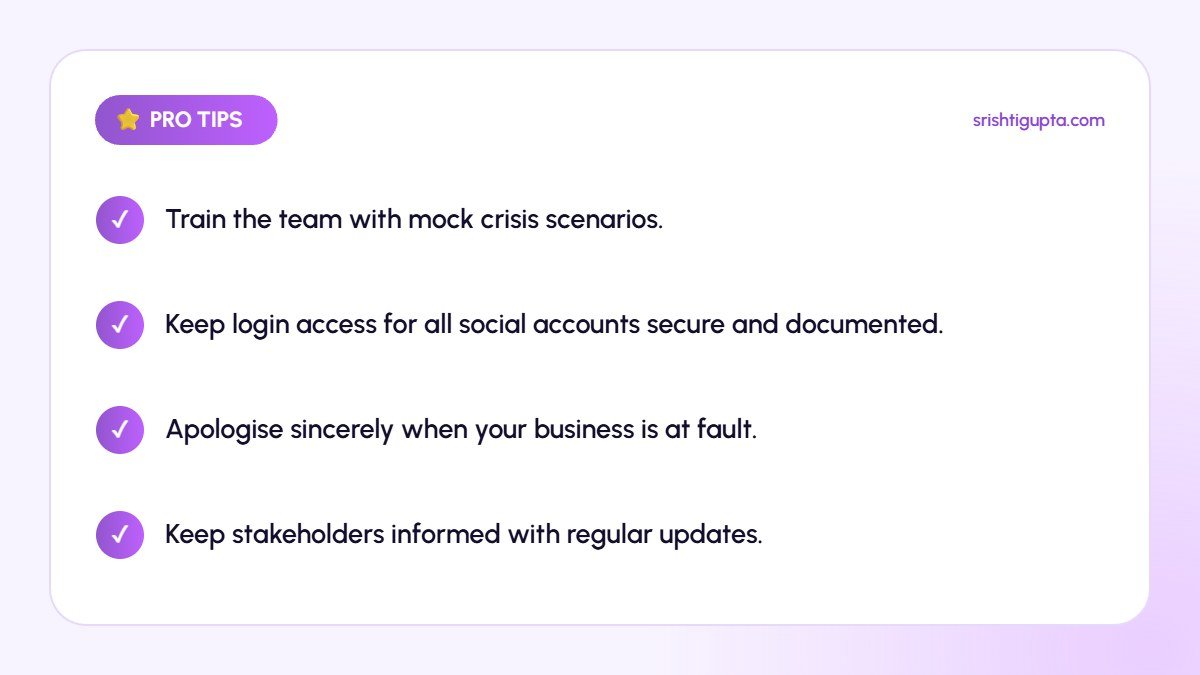
- Train the team with mock crisis scenarios.
- Keep login access for all social accounts secure and documented.
- Apologise sincerely when your business is at fault.
- Keep stakeholders informed with regular updates.
Common Mistakes to Avoid
- Deleting negative comments without explanation.
- Responding defensively or emotionally.
- Continuing scheduled promotional posts during a crisis.
- Waiting too long to acknowledge the issue.
Frequently Asked Questions
What counts as a social media crisis?
A situation where negative attention spreads quickly and threatens your reputation, customer trust or business operations.
How quickly should a brand respond?
Acknowledge the issue within the first hour if possible, even if you only share that you are investigating and will update soon.
Should I delete negative comments?
Only remove comments that violate your community rules, such as abuse or spam. Deleting genuine complaints usually makes the situation worse.
Final Thoughts
You cannot prevent every crisis, but you can be ready for it. With monitoring, clear roles and prepared responses, your business can respond with confidence and protect the trust you have built.
Need expert help? Srishti Gupta is a digital marketing expert in Ludhiana. Explore her social media marketing or get in touch to discuss your project.