
Reaching customers in their own language builds trust and increases conversions. AI translation tools now make it fast and affordable to translate websites, social posts, emails and ads into Hindi, Punjabi and dozens of other languages, as long as you combine automation with human review.
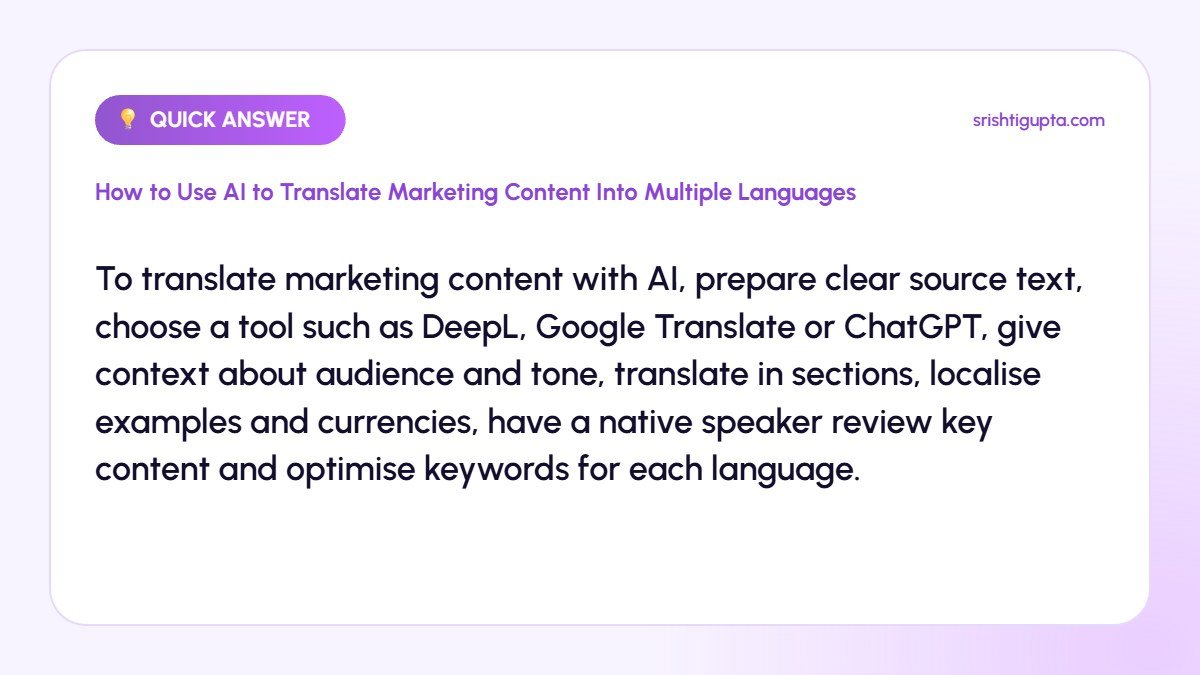
Quick answer: To translate marketing content with AI, prepare clear source text, choose a tool such as DeepL, Google Translate or ChatGPT, give context about audience and tone, translate in sections, localise examples and currencies, have a native speaker review key content and optimise keywords for each language.
Why It Matters
Literal translations can sound awkward or even offensive. Thoughtful AI-assisted localisation lets small businesses expand into new regions and communities without the cost of full translation agencies, while keeping the brand voice consistent.
Step-by-Step: How to Use AI to Translate Marketing Content Into Multiple Languages
Step 1: Choose content and languages
Start with high-impact content such as landing pages, product descriptions and ads. Pick languages based on your audience data and target markets.
Step 2: Prepare the source text
Use short sentences, avoid slang and idioms that do not translate well, and create a glossary of brand terms and product names that should stay unchanged.
Step 3: Select the right AI tool
DeepL and Google Translate are good for straightforward text, while AI assistants like ChatGPT or Gemini can adapt tone when you give detailed context.
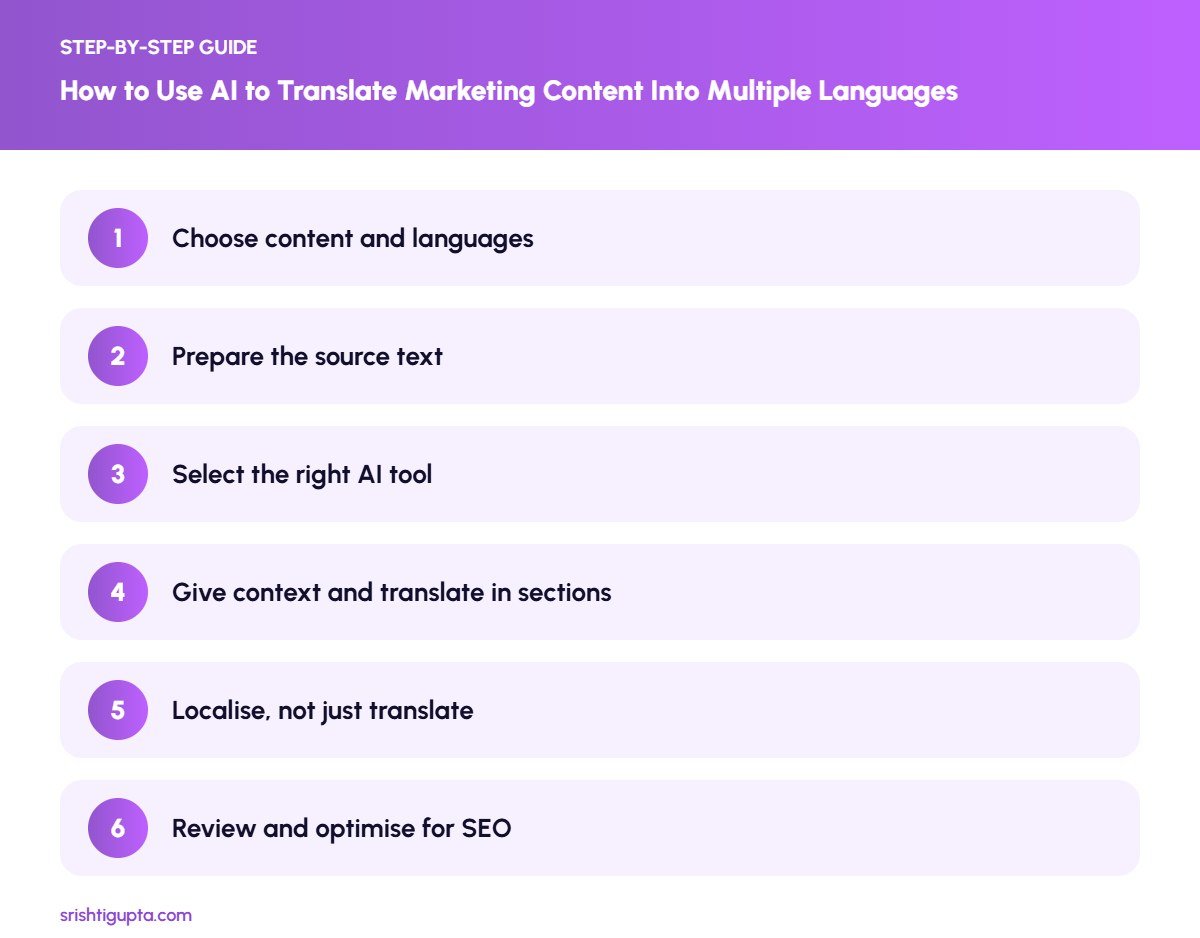
Step 4: Give context and translate in sections
Tell the AI the audience, tone, platform and purpose, and translate section by section. Ask it to keep formatting and placeholders intact.
Step 5: Localise, not just translate
Adapt examples, currencies, measurements, dates and cultural references. Make sure calls to action feel natural in the target language.
Step 6: Review and optimise for SEO
Have a native speaker check important content. Research keywords in the target language, translate meta titles and descriptions, and use hreflang tags for multilingual websites.
Pro Tips
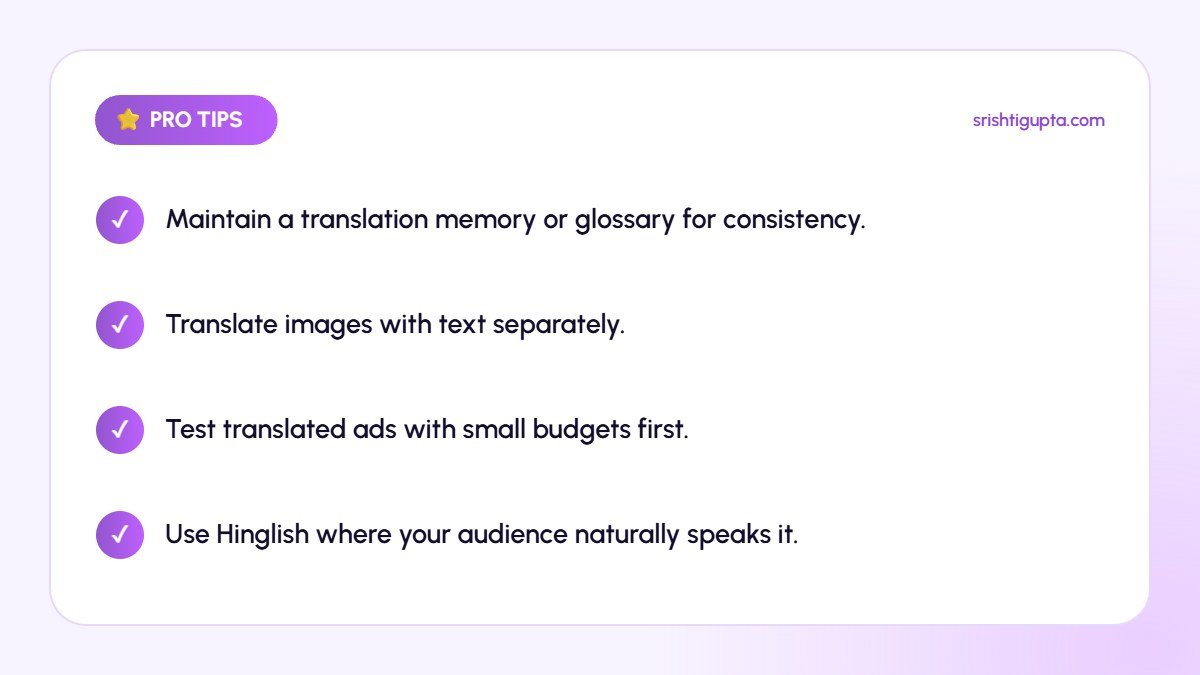
- Maintain a translation memory or glossary for consistency.
- Translate images with text separately.
- Test translated ads with small budgets first.
- Use Hinglish where your audience naturally speaks it.
Common Mistakes to Avoid
- Publishing machine translations without review.
- Translating keywords literally instead of researching them.
- Ignoring right-to-left or script-specific layout issues.
- Mixing languages inconsistently on the same page.
Frequently Asked Questions
Is AI translation good enough for marketing?
It is good for drafts and low-risk content. For important pages, ads and legal text, human review is still recommended.
Which AI tool is best for Indian languages?
Google Translate supports many Indian languages well, and AI assistants can improve tone when given context. Always check with a native speaker.
How do I handle multilingual SEO?
Create separate URLs for each language, translate metadata, research local keywords and add hreflang tags so search engines show the right version.
Final Thoughts
AI makes multilingual marketing accessible to every business. Combine fast AI translation with human review and local insight, and you can connect with new audiences in the language they trust.
Need expert help? Srishti Gupta is a digital marketing expert in Ludhiana. Explore her AI-powered digital marketing or get in touch to discuss your project.