
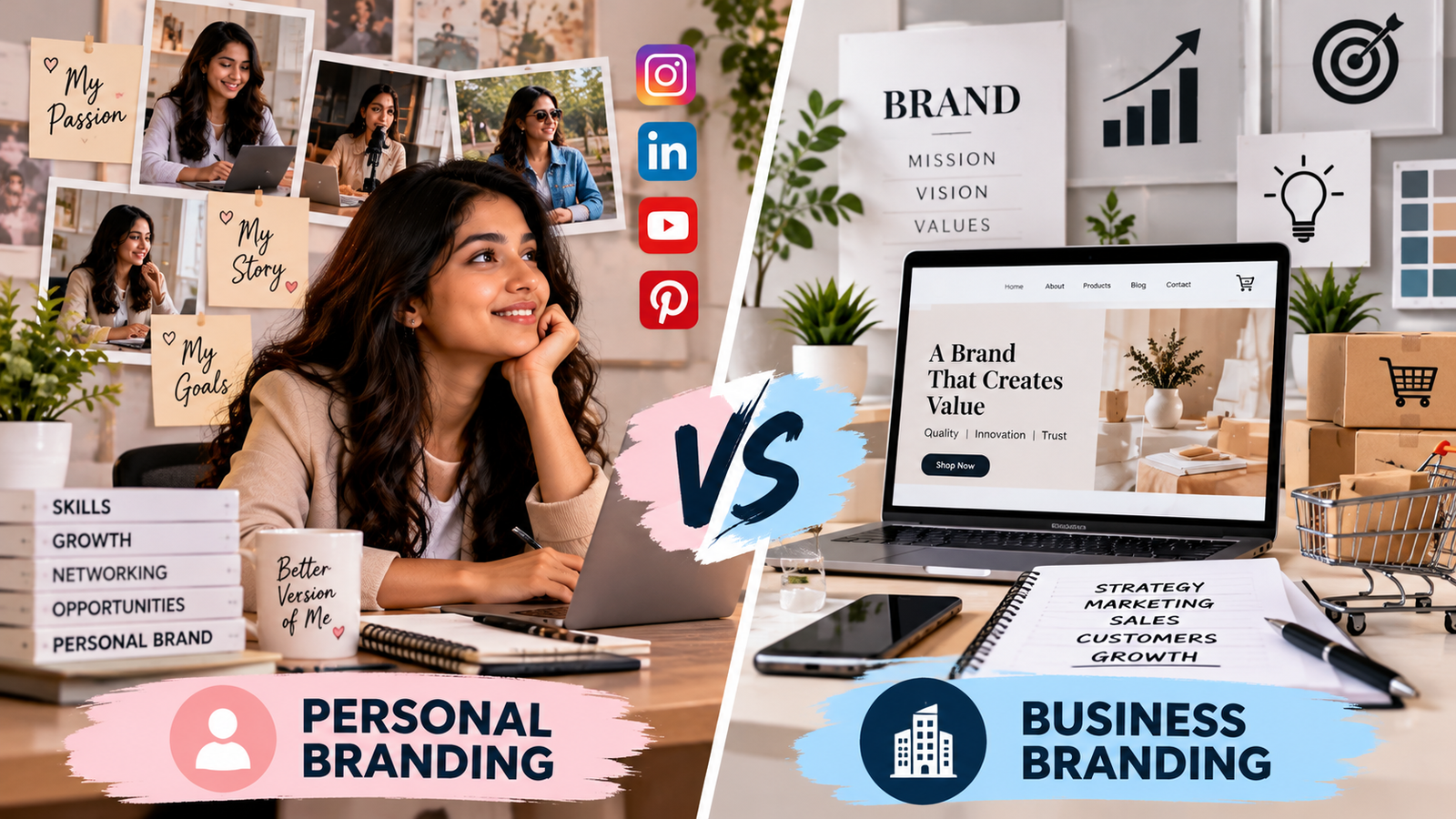
Personal Branding vs Business Branding: Key Differences Explained

Branding plays an important role in how individuals and organizations communicate their identity.
However, personal branding and business branding are not the same.
While personal branding focuses on an individual’s expertise, values, and professional identity, business branding represents an organization, its products, services, and overall customer experience.
Understanding the difference can help entrepreneurs, freelancers, and professionals develop more effective branding strategies.
What Is Personal Branding?
Personal branding involves communicating an individual’s professional identity and reputation.
It often highlights expertise, experiences, values, and personality.
For example, a digital marketing professional might build a personal brand by sharing SEO tutorials, marketing insights, and practical project experiences.
The individual becomes the central identity associated with the content.
What Is Business Branding?
Business branding focuses on creating a recognizable identity for a company or organization.
It includes the business name, visual identity, communication style, products, services, and customer experience.
For example, a handmade home décor business might build its brand around craftsmanship, traditional design, and premium gifting.
Customers recognize the business through its products, presentation, and consistent identity.
Personal Branding vs Business Branding: Comparison
Feature | Personal Branding | Business Branding |
|---|---|---|
Main identity | Individual professional | Company or organization |
Primary focus | Expertise and reputation | Products, services, and customer experience |
Communication | Often personal and experience-based | Represents the organization’s voice |
Visual identity | Professional photos and personal style | Company logo, colors, packaging, and design |
Content | Insights, skills, and professional experiences | Product information, brand stories, and customer education |
Long-term continuity | Closely connected to the individual | Can continue independently of the founder |
Benefits of Personal Branding
Personal branding can help professionals communicate expertise, develop industry relationships, and attract relevant opportunities.
It is particularly useful for freelancers, consultants, educators, and professionals whose work depends heavily on individual knowledge.
A strong personal brand can also support career mobility because professional expertise is not tied to one employer.
Benefits of Business Branding
Business branding helps organizations communicate their identity consistently.
It can support customer recognition, trust, and differentiation.
A well-developed business brand also creates a foundation for marketing campaigns, product launches, and long-term customer relationships.
Can Personal Branding and Business Branding Work Together?
Yes. Personal and business branding can complement each other.
For example, a business founder might publish educational content through a personal profile while the company account focuses on products, services, and customer experiences.
The founder’s personal expertise can support the business’s credibility, while the business provides evidence of professional work.
However, both brands should have clear identities and avoid confusing audiences.
Which Branding Strategy Should You Choose?
Your decision depends on your professional goals.
If you are a freelancer or consultant selling services based on your expertise, personal branding may be especially important.
If you are building a company with products, employees, and a separate identity, business branding should be a major priority.
Entrepreneurs who want to become industry voices while growing their companies may benefit from developing both.
Conclusion
Personal branding and business branding serve different purposes, but both involve communicating value and building trust.
Personal branding focuses on the individual, while business branding represents the organization.
Understanding these differences allows you to choose a strategy that supports your professional or business goals.